




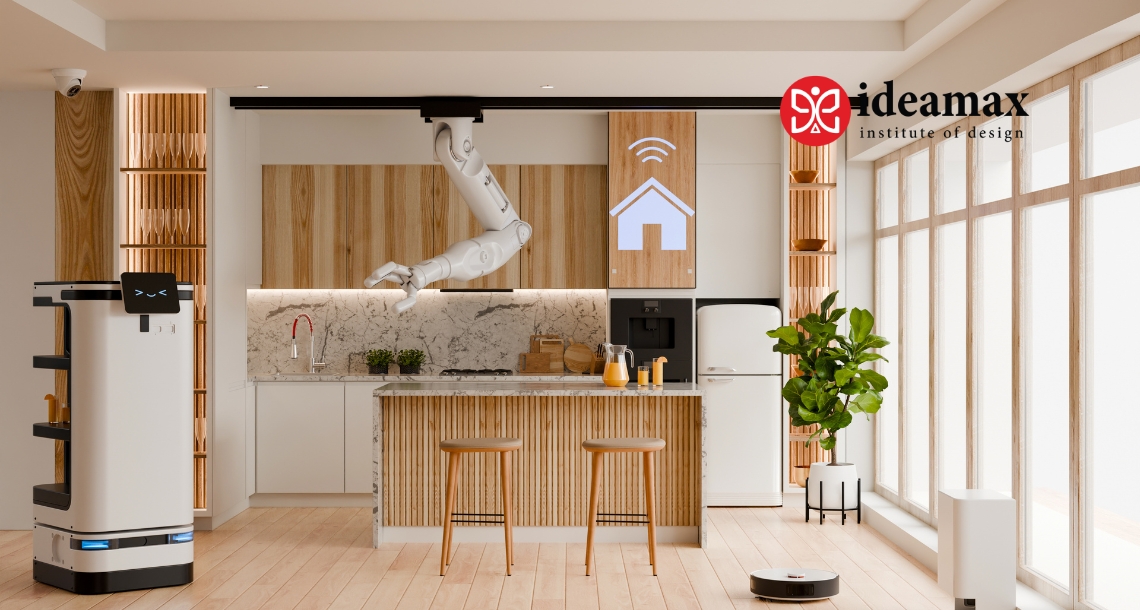
The world of Interior Design is changing rapidly. This is because the industry is switching its gears from sketches, manual planning, and imagination to artificial intelligence and smart technology. Homes are becoming more intelligent with personalized room layouts and voice-controlled lighting.
It is important to understand these trends for students looking for an Interior Design Course because designing now combines aesthetics with technology to create futuristic homes.
The New Era of Interior Design
Traditional interior design was only focused on creativity, craftsmanship, and personal taste. Although those elements are still important, a new dimension has also been introduced with technology.
Artificial intelligence is currently helping designers plan spaces faster, visualize ideas more clearly, and offer solutions tailored to modern lifestyles. You can often notice these changes in smart homes.
A smart home binds the connected systems like lighting, security, entertainment, and climate control into a seamless living experience. These innovations are making home more beautiful and efficient.
A Diploma in Interior Design now often help you learn AI and automation, valuable like mastering design software.
How AI Is Changing Interior Design
Artificial intelligence is now helping interior designers to solve many problems. Below is the list of the top of those problems:
Smarter Space Planning
Trial and error are important parts of designing a room. AI can simplify this process by analyzing room dimensions and suggesting layouts. They can also recommend the following elements:
- Furniture placement
- Storage optimization
- Space-saving arrangements
- Better traffic flow
- Lighting adjustments
It is a major plus point for urban apartments because every square foot matters in such flats. Designers must avoid costly mistakes before starting anything in these areas. This is why students of Interior Design Classes are learning the use of AI tools to improve space planning in real-time projects.
Personalized Design Experiences
Personalization is one of the biggest challenges for interior designers. But AI considers it among its biggest strengths. Before giving any suggestion, these tools are often studied:
- User preferences
- Lifestyle habits
- Room usage
- Budget
- Style interests
It then creates tailored design ideas based on this data.
For example, AI can suggest a Scandinavian-style living room for one client and a minimalist modern design for another. It helps designers to meet the clients’ expectations more effectively.
As smart homes are becoming more common, personalization might become a standard part of interior planning.
Smart Homes Are Changing Expectations
Attractive interiors are not enough for modern homebuyers. They also prefer convenience. Smart homes enter here because they can offer flexibility through the following means:
- Automated lighting
- Voice-controlled systems
- AI-powered assistants
- Smart security
- Energy management
- Climate control
Sustainable Interior Design Through Technology
Most homebuyers now prefer sustainable designs. AI and smart homes support eco-friendly living through intelligent systems. Below are the examples of those systems:
- Smart thermostats
- Solar-powered automation
- Water monitoring systems
- Energy consumption tracking
- Automated blinds
- Smart waste management
These technologies help reduce utility bills and promote greener living. Interior designers should therefore understand sustainable design practices.
AI and Human Creativity
There is a broader myth that AI will replace designers. It won’t. AI can only analyse data and generate ideas. But it cannot understand human emotions, cultural preferences, or the emotional meaning of a home.
The following are the core elements of interior design:
- Creativity
- Personal interaction
- Emotional understanding
- Storytelling
- Lifestyle interpretation
AI only enhances the process by reducing repetitive tasks and improving efficiency. The combination of creativity and smart tools is important for the best results.
Why Students Should Learn This Now
Despite technological evolution, the interior design industry continues to grow. But clients now expect to learn the following skills:
- Smart home systems
- AI-based planning
- Virtual presentations
- Sustainable solutions
- Modern automation
Ideamax can help students learn the fundamentals of creative design and future-ready technologies. As the demand for smart interiors grows, professionals with these skills will get stronger career opportunities.
It has become mandatory to understand AI for those in an Interior Design Course for career growth or personal interest.
The Future of Interior Design
The upcoming years are expected to see more changes in the Interior design industry. Below are the new and emerging trends of this industry:
- AI-generated furniture suggestions
- Augmented reality room previews
- Adaptive lighting based on mood
- Smart kitchens
- Intelligent furniture
- Wellness-focused homes
- AI-based renovation planning
Homes will become more responsive in the future. Interior designing will move beyond decoration as it will turn into a daily lifestyle technology.
Final Thoughts
Artificial intelligence and smart homes are changing the traditional way in which interior designers design, experience, and live in their spaces. They are becoming more intelligent, efficient, and personalized.
AI has entered the industry to empower designers. Students who learn the Interior Design Course, these technologies will have an extra advantage in the job market. Aspiring designers can be a part of the exciting future with the right guidance from Ideamax.