



Fashion is a branch that is deeply connected to the culture of all civilisations. As an industry, fashion has always evolved alongside science and technology. From the moment early humans learned to create clothes using yarn, fashion began its journey of continuous change. Fashion is not a monolithic concept; it has evolved differently across regions, cultures, and time periods.
With the invention of machines such as spinning mills, sewing machines, and other industrial tools, the pace and direction of fashion evolution accelerated significantly. Later, advancements like Computer Aided Design, digital drawing, quick visualisation, and related technologies brought a major transformation to the fashion industry. Each technological shift has influenced how designers think, design, and create wearable art.
Today, the fashion industry is experiencing its most radical transformation yet. The rise of digital fashion has expanded creative boundaries and established an entirely new norm. What once existed only in science fiction novels and movies has now become a part of everyday life.
Digital fashion is redefining creativity, production processes, sustainability, and even how people experience apparel and clothing. It is no longer a futuristic concept but an essential element of modern fashion education and professional practice.
At Ideamax Institute of Design, students are introduced to these evolving technological advancements from day one. This forward-thinking approach prepares students pursuing fashion designing courses in Coimbatore to stay competitive, innovative, and industry-ready in the ever-changing world of fashion.
What is Digital Fashion & Why the Hype?
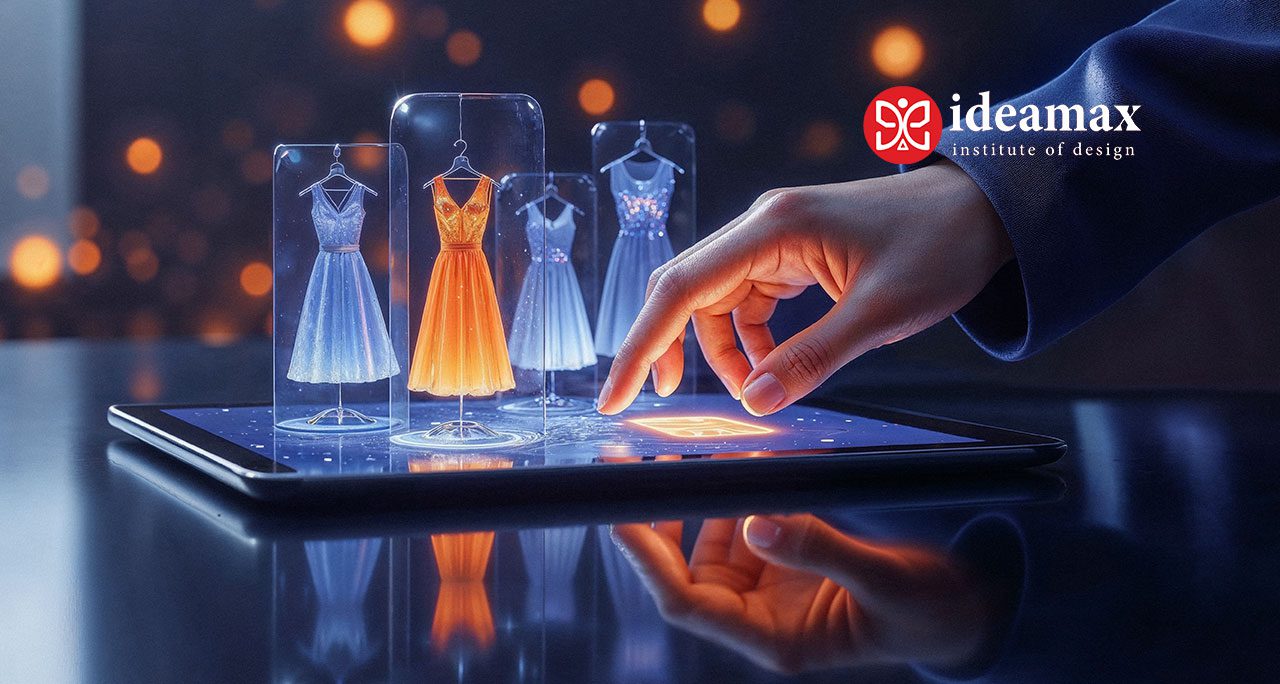
Digital fashion refers to the way clothing and accessories are designed, visualised, and sometimes even experienced within virtual environments and digital landscapes. In many cases, a fashion designer creates a garment in digital form before producing it in real life, allowing better design accuracy and creative flexibility.
Today, the scope of digital fashion includes 3D garment design, virtual wearing, AI-assisted sketching, and augmented reality fashion shows. Some designers are taking this innovation further by working exclusively on digital creations for avatars, gaming platforms, and the metaverse. The gap between the digital realm and real life is rapidly shrinking, and soon these two worlds will seamlessly connect.
Contrary to popular opinion, this technological advancement has opened new opportunities for fashion designers. Digital fashion is quickly complementing—and in many ways succeeding—traditional fashion by offering more cost-effective and efficient approaches to design and production. The presence of digital tools significantly enhances the productivity, creativity, and efficiency of a fashion designer.
Why Digital Fashion Is the Way Ahead
The fashion industry, like many other industries, is undergoing a tectonic shift. It is facing increasing pressure to innovate while simultaneously reducing waste and environmental impact. Traditional design methods often require multiple physical samples and repeated iterations of the same apparel before achieving perfection. This process leads to material wastage and longer product development cycles.
Digital fashion offers a simple and cost-effective solution to these challenges. Designers can create, modify, and test their designs virtually before producing even a single strand of thread. This approach not only saves time and reduces costs but also promotes sustainable fashion practices and more responsible production methods.
At the same time, modern consumer behaviour is evolving rapidly. With the rise of social media, gaming platforms, influencers, and digital identities, the fashion industry has expanded into the digital realm. Today, consumers can explore and virtually try on fashion products such as apparel, accessories, and eyewear. As a result, wardrobes are no longer limited by physical space or location, redefining how people experience fashion in the digital age.
How Technology Is Transforming Fashion Design
Digital technologies are revolutionising the fashion industry by changing the way fashion is designed, produced, and experienced at a fundamental level.
Digital Designing and 3D Visualisation of Apparels
CAD & 3D design tools allow fashion designers to create garments digitally by simulating accurate fabric behaviour, drape, and fit. Nextgen software such as CLO3D and Browzwear enables designers to visualise how an apparel will look on different body types and on different people. It improves design accuracy and speeds up the development process. It also widens the scope of collaboration.
AI-Assisted Workflow
Artificial intelligence is becoming a creative partner in all aspects of business and fashion design is no exception. AI tools help designers to generate mood boards, predict fashion trends and explore new design directions.
AI does not replace creativity but it takes care of repetitive tasks and opens new avenues. Fashion designer who includes AI in their workflow can outperform others in the industry.
Usage of Augmented Reality
Augmented reality allows customers to try clothing virtually through apps and smart glasses and mirrors. This improves the shopping experience and reduces demand for logistics.
Sustainability & Eco-friendly Innovations
The biggest benefit of digital fashion is sustainability. With digitalisation of fashion products, the huge stress on the environment that are caused due to unnecessary physical sampling, transportation, and wastage of materials. Digital fashion lowers the environmental footprint of fashion industry. Every apparel you wear, every dress you try on all contribute to this.
New Career Opportunities in Digital Fashion
The rise of digital fashion has not reduced the career opportunities but has opened entirely new career paths. Fashion designers can now work as digital fashion artists, 3D garment designers, virtual stylists, fashion technologists and even metaverse fashion creators.
Brands are actively seeking professionals who understand both design principles and digital tools. Apart from conventional job opportunities, the freelancing opportunities have also expanded. For students studying in our fashion designing institute in Coimbatore, this means broader career possibilities beyond traditional fashion roles.
How Ideamax Institute of Design helps Fashion Designers
Fashion education must evolve in line with current trends and industry demands. Designers who rely solely on traditional methods may struggle to adapt to the rapidly changing fashion market and risk being left behind. At Ideamax Institute of Design, digital fashion is fully integrated into the curriculum to ensure students stay relevant and competitive.
Students are trained in digital design tools, 3D visualisation software, AI-assisted creativity, and other advanced technologies shaping the fashion industry. Through this approach, we ensure our Diploma in Fashion Designing students are truly future-ready.
For aspiring fashion designers, understanding digital fashion is no longer optional—it is essential to stay ahead of industry changes. Ideamax Institute of Design provides the right foundation, skills, and exposure needed to successfully transition into the digital future of fashion.